
Why copper tube and aluminum fin
In a finned tube coil, refrigerant flows inside the tubes and air flows across the fins. The tube must contain pressure, conduct heat and be brazed into a sealed circuit. Copper does all three. The fins only need to conduct heat into a large surface of air, so they can be thin, light aluminum. Compared with an all-copper coil, the copper-aluminum design is lighter and cheaper, which is why it is the standard for evaporators and condensers in refrigeration, air conditioning and heat pumps.
The materials
| Material | Our specification | What the specification means |
|---|---|---|
| Copper tube | TP2M, inner-grooved, 7 / 7.94 / 9.52 / 12.7 / 15.88 mm outside diameter | TP2 is phosphorus-deoxidized copper, which brazes without becoming brittle. M is the soft, annealed temper, needed for bending and expansion. Inner grooves increase the inside surface and the heat transfer of evaporating and condensing refrigerant. |
| Fin stock | 8011-H24 aluminum foil, hydrophilic, bare or anti-corrosion coated | 8011 is an aluminum-iron-silicon alloy widely used for fin foil. H24 is a half-hard temper: soft enough to form collars, stiff enough for the fins to keep their shape. |
Incoming copper and aluminum are inspected and recorded before they reach the line. Hydrophilic fin stock comes from leading Chinese mills such as Dingsheng, or from the brand a customer specifies.
Step by step
1. Tube bending
Copper tube is uncoiled, straightened, cut and bent into U-shaped hairpins. The bend radius is fixed by the tube pitch of the coil. The outer wall thins in the bend, so the tube wall must be chosen with the working pressure in mind.
2. Fin stamping
A press line stamps the fin pattern, the holes and the collars around them into aluminum foil. The collar height sets the fin pitch, from 1.5 to 6 mm in our range. Tight pitches give more surface in less space; wide pitches resist frost and dirt.
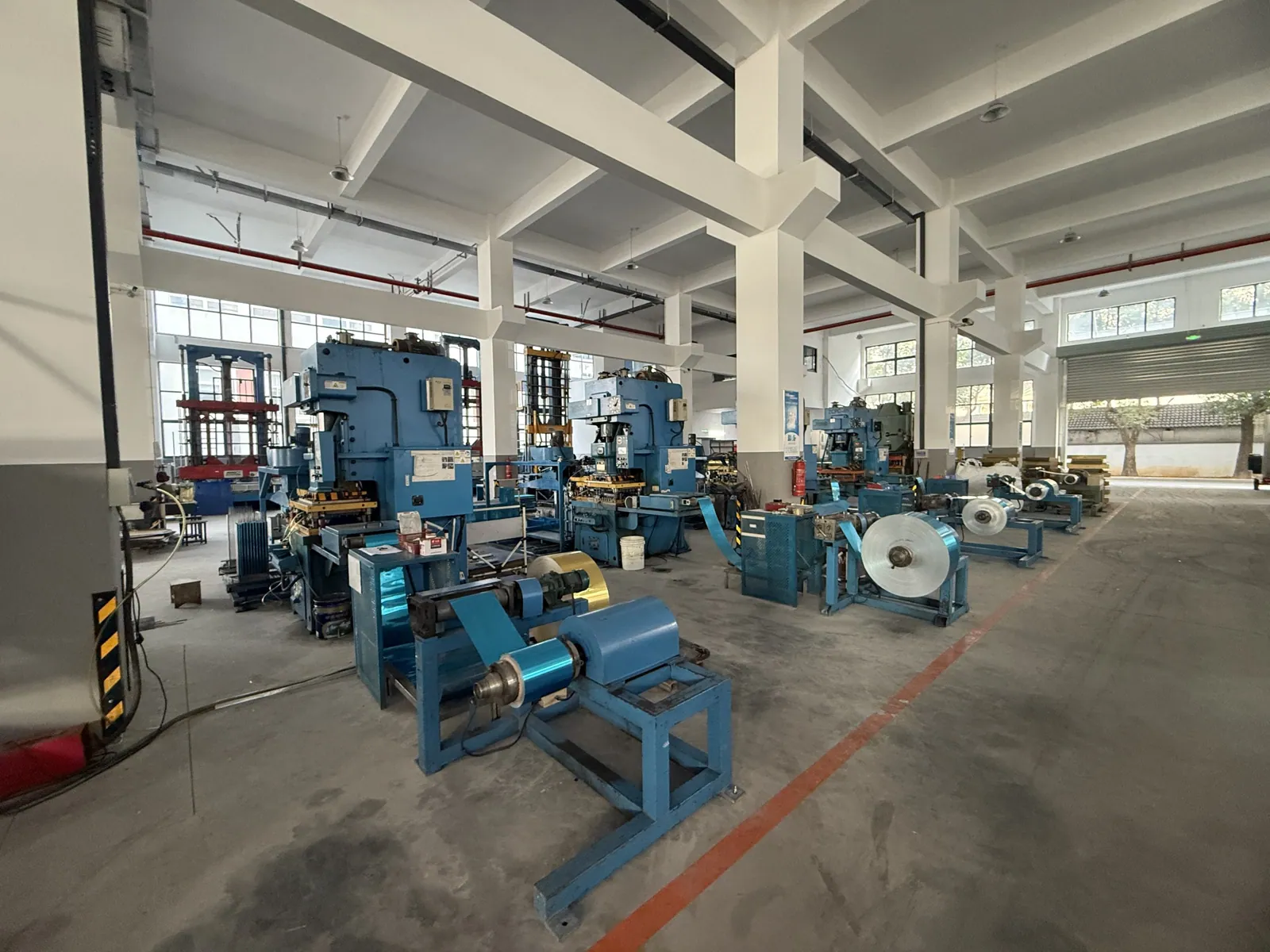
3. Fin insertion
Hairpins are laced through the stack of fins by hand and the tube count is checked before the next step. A missing tube is easy to fix now and impossible after expansion.
4. Tube expansion
This is the step that most decides performance. An expansion tool is pushed through each tube and enlarges it until the tube presses hard against every fin collar. Heat has to cross that contact. If expansion is too weak, tiny gaps remain between tube and collar, and the coil loses capacity even though it looks perfect. If it is too strong, the inner grooves flatten or the collars split. Expansion is mechanical in our plant, and the tooling is matched to each tube size and pattern.
5. Cleaning and drying
Stamping and expansion use lubricating oil. It is removed and the coil is dried in an oven. Oil left in the coil would contaminate the refrigerant circuit, and oil on the outside would weaken the brazed joints and collect dirt on the fins.
6. Coil bending
Where the drawing asks for it, the flat coil is bent into an L or U shape to fit the unit.
7. Brazing
Return bends and headers are brazed to close the refrigerant circuits. Almost every leak in a finished coil starts at a joint, so brazing is done by trained technicians and every joint is covered by the next test.
8. Leak testing
Every coil is pressurized to 3.8 MPa and checked for leaks. Not a sample: every coil. After the test, coils are blown clean with air and the fins are combed straight.
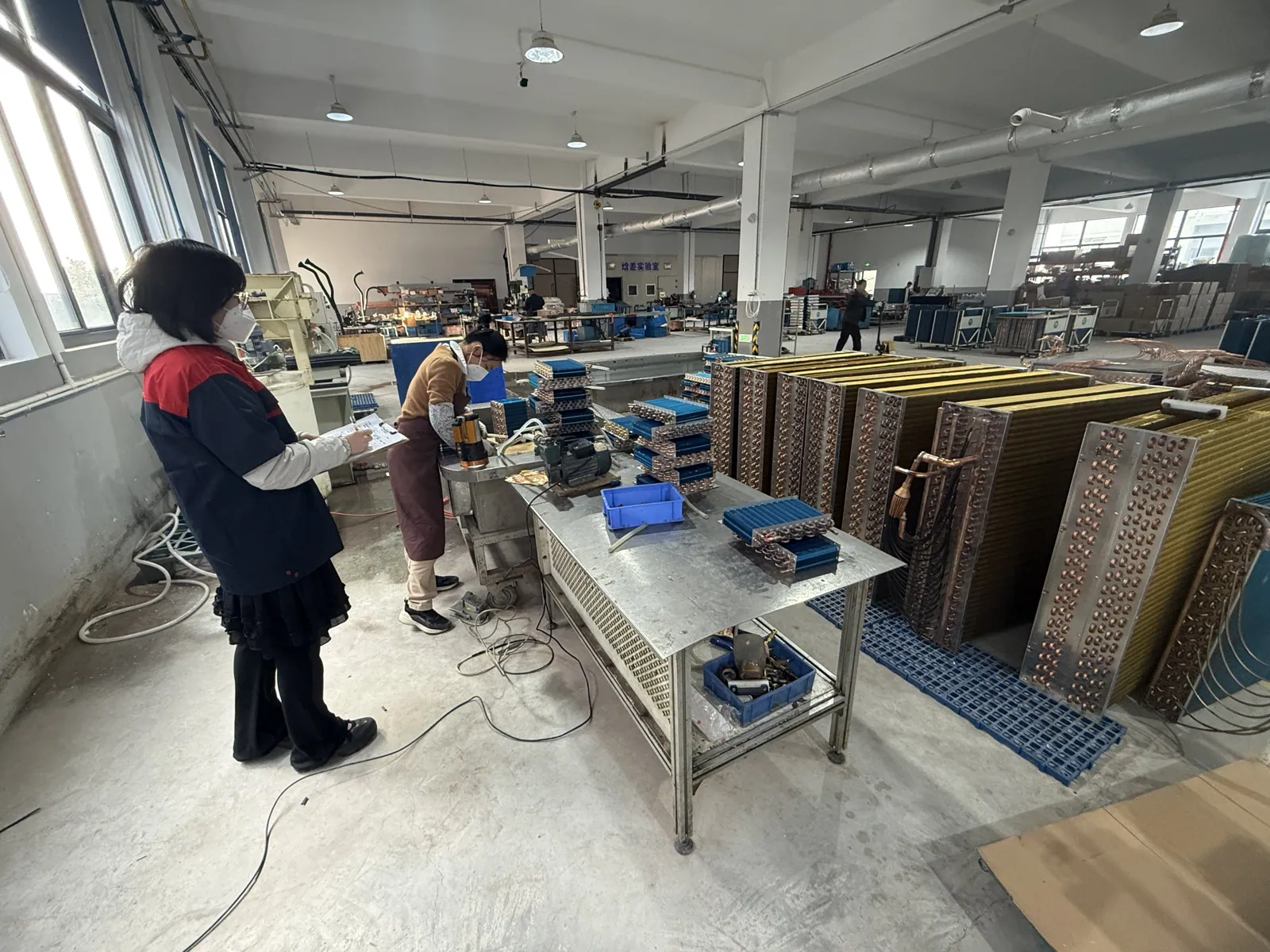
9. Final inspection, packing and shipping
Inspectors check finished coils and record the results. Coils are protected, packed for export and moved to the dispatch area.
Tube patterns: the geometry behind the coil
The tube pattern, meaning the tube diameter, the spacing between tubes in a row (tube pitch) and the spacing between rows (row pitch), fixes the fin die. We hold tooling for twelve standard patterns:
| Tube outside diameter | Tube pitch | Row pitch |
|---|---|---|
| 7 mm | 21 mm | 12.7 mm |
| 7 mm | 21 mm | 18.19 mm |
| 7 mm | 19.05 mm | 16.5 mm |
| 7 mm | 25 mm | 21.65 mm |
| 7.94 mm | 22 mm | 19.05 mm |
| 7.94 mm | 25 mm | 21.65 mm |
| 9.52 mm | 25.4 mm | 15.88 mm |
| 9.52 mm | 25.4 mm | 22 mm |
| 9.52 mm | 25 mm | 21.65 mm |
| 12.7 mm | 31.75 mm | 27.5 mm |
| 12.7 mm | 38.1 mm | 33 mm |
| 15.88 mm | 38.1 mm | 33 mm |
Choosing one of these avoids new fin tooling, which saves cost and lead time. If your drawing uses a different pattern, send it and we will check the tooling.
Fin finish and corrosion
Hydrophilic fins let condensate spread into a thin film and drain, instead of forming drops that bridge the fins and block airflow, so they suit evaporators. Bare aluminum is the economical choice for condensers in clean, dry air. For coastal or polluted air, coated tube and fins reach 1000 hours or more in neutral salt spray testing.
The same process from 1.8 kW to 1200 kW
The steps above do not change with size; only the tooling and handling do. Some recent examples:
| Application | Size (mm) | Capacity | Medium |
|---|---|---|---|
| Evaporator, small heat pump dryer | 200 × 150 × 40 | 1.8 kW | R32 |
| Condenser, commercial mini ice maker | 450 × 220 × 90 | 7.2 kW | R290 |
| Evaporator, cold chain box refrigeration unit | 920 × 420 × 110 | 24 kW | R404A |
| Condenser, industrial water chiller | 1600 × 650 × 180 | 65 kW | R134a |
| Dry cooler, indirect cooling for a data center | 13000 × 3000 × 150 | 1200 kW | 50 % ethylene glycol solution and pure water |
Our size range runs from 80 × 80 × 20 mm to 16000 × 3000 × 400 mm, with heat-transfer areas from 0.2 m² to more than 100 m².
Questions to ask a coil supplier
- Is every coil leak-tested, and at what pressure? Or only a sample?
- Is expansion mechanical, and is the tooling matched to the tube and pattern?
- How are coils cleaned before brazing, and how is internal cleanliness checked?
- What tube grade and temper, and what fin alloy and temper, are used?
- Is the pattern on my drawing a standard one, or does it need new tooling?
Ready to quote? Read how to specify a custom finned tube heat exchanger, see the full process with photos on our capabilities page, or go to the finned tube heat exchanger page. The minimum order is 50 pieces, and samples take about one week.