
Heat transfer · made to drawing
Tube-Embedded Liquid Cold Plates
A copper tube pressed into a 6061-T6 aluminum plate. The coolant stays inside one continuous tube with no welded joints in its path, which keeps the leak risk low next to live electronics.
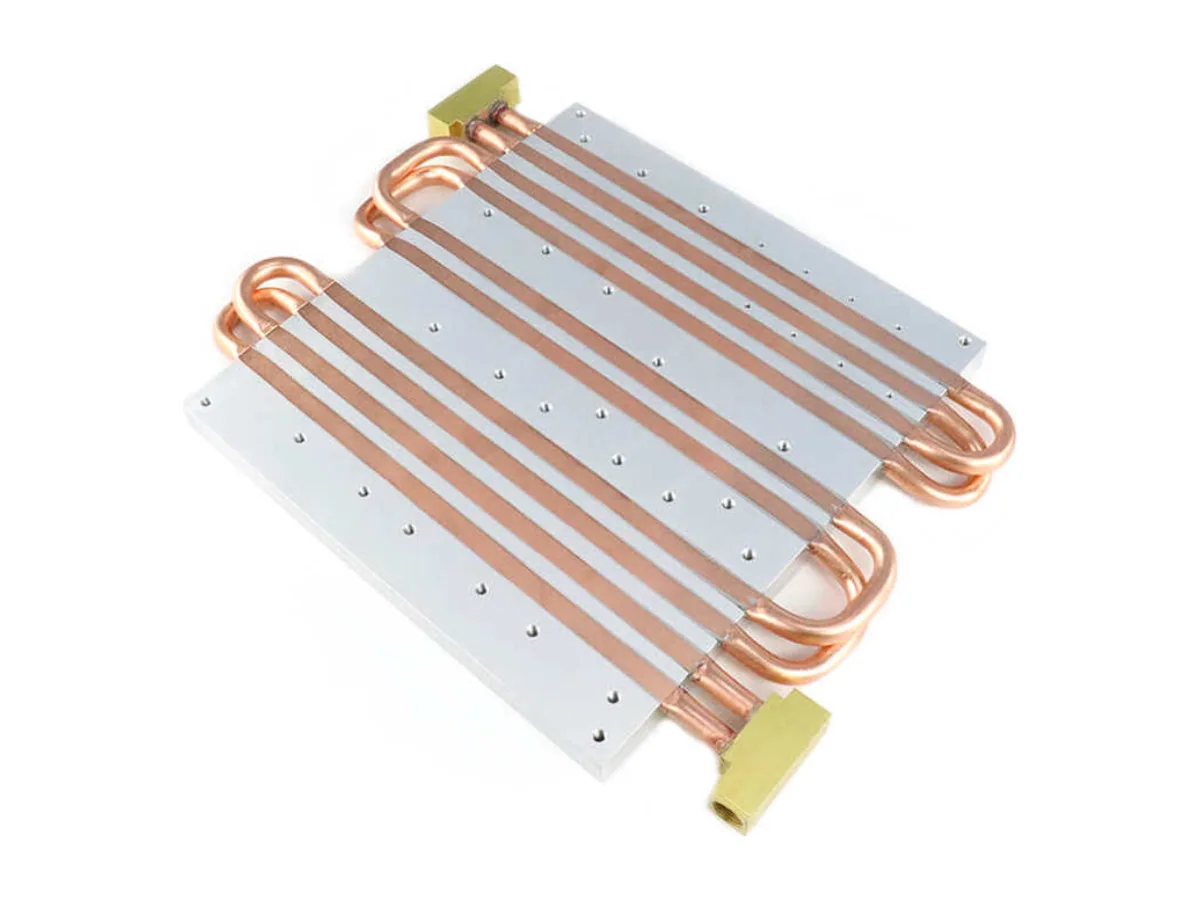
- High-purity copper tube with thermal conductivity of about 400 W/(m·K).
- 6061-T6 aluminum base, machined flat for good contact with the device.
- The coolant path is one continuous tube. There are no welds inside the plate.
- Hard anodizing, 15–25 µm, for wear and corrosion resistance.
- Silicone or EPDM seals at the fittings.
- Plate size, tube route, mounting holes and fittings follow your drawing.
Specifications
| Construction | Copper tube embedded in a machined aluminum plate |
|---|---|
| Base plate | 6061-T6 aluminum |
| Cooling tube | High-purity copper, thermal conductivity about 400 W/(m·K) |
| Coolant path | Continuous tube, no welded joints inside the plate |
| Surface treatment | Hard anodizing, 15–25 µm |
| Seals | Silicone or EPDM |
| Coolant | Water, water-glycol or other coolant on request |
| Customization | Plate size, thickness, tube layout, mounting holes and fittings to drawing |
How it is built
A channel is machined into the aluminum plate, the copper tube is pressed into it and the contact face is finished flat. Heat flows from the device into the plate, into the tube wall and away with the coolant.
Where it is used
Power electronics
IGBT modules, drives and converters.
EV charging
Charging modules and power cabinets.
Data centers
CPU and GPU cooling in liquid-cooled servers.
Batteries and energy storage
Battery packs, battery management systems and PV inverters.
From our workshop
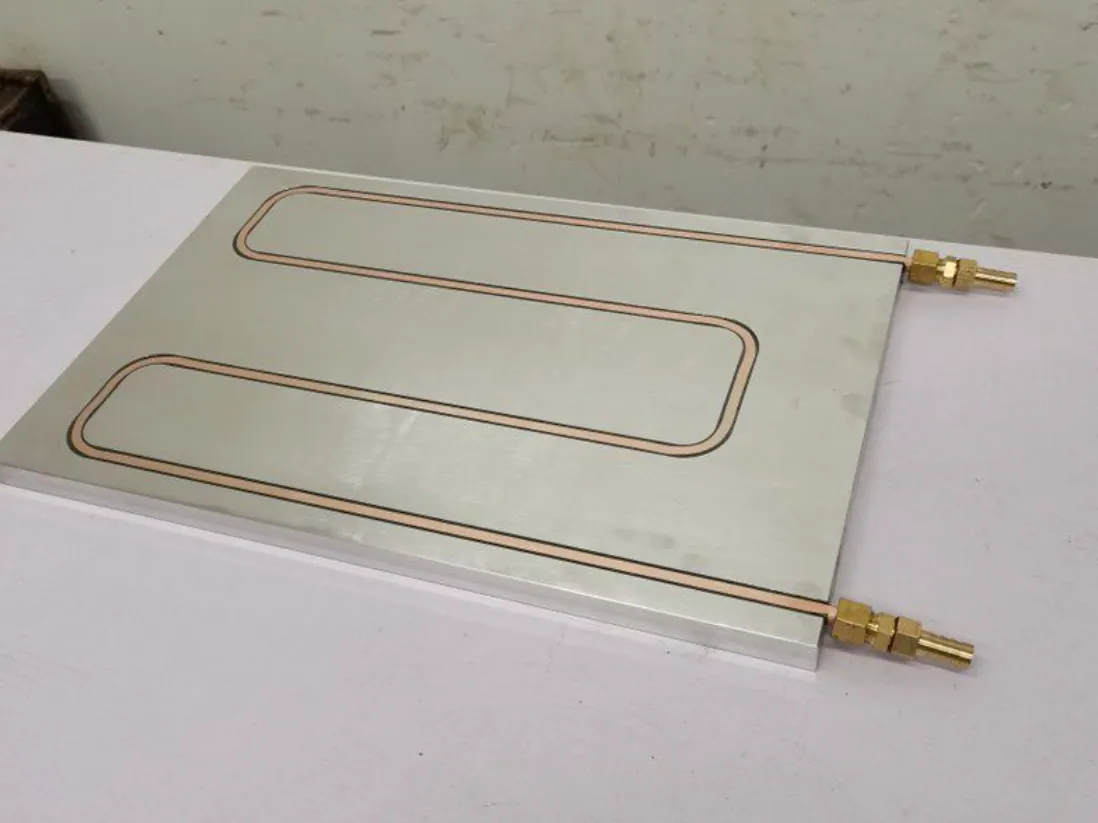
Unretouched photos taken on our own floor.
Questions and answers
What do you need to design a cold plate?
The heat load in watts, the maximum allowed surface temperature, the coolant and its flow rate and inlet temperature, the footprint of the device with mounting holes, and the fitting type.
Why choose a tube-embedded plate?
The coolant never touches a welded seam inside the plate, so the leak risk is low. The design is also economical for low and medium heat flux. For very high heat flux, tell us your numbers and we will say honestly whether this construction fits.
Which coolants can be used?
Water and water-glycol are the common choices with copper tube. Tell us the coolant so we can confirm compatibility.
Can the plate be anodized or left bare?
Standard finish is hard anodizing, 15–25 µm. Other finishes are possible on request.
Related products
Ask for a quote on Liquid Cold Plates.
Tell us the quantity and where it will be used. We reply by email with price, lead time and shipping options.